"Baloch Liberation Army Hijacks Jaffar Express: Causes, Casualties & Impact on Pakistan’s Security
3/13/20255 min read
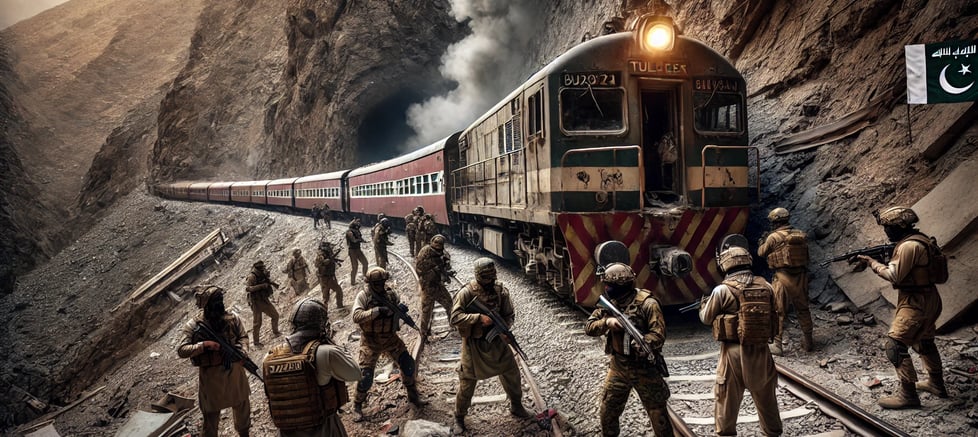
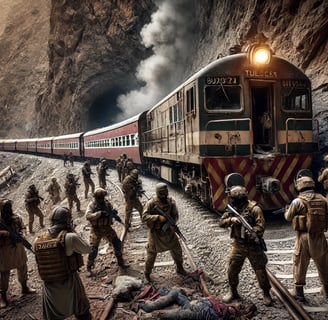
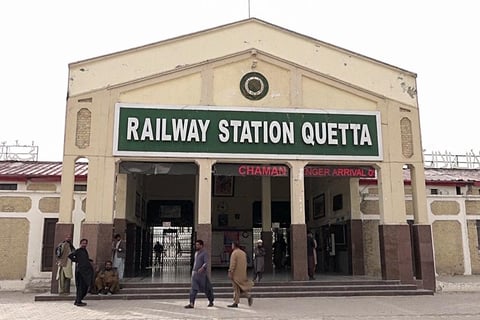
In a daring and disturbing act, Baloch Liberation Army (BLA) separatist militants recently hijacked the Jaffar Express, a Quetta to Peshawar passenger train in Pakistan. The act serves not only to highlight the mounting insurgency in Balochistan but also to provide insight into underlying grievances driving such extreme measures
The Hijacking Incident
On March 11, 2025, the Jaffar Express with about 440 passengers was forcefully stopped in Balochistan's mountainous Bolan area. BLA militants launched a simultaneous attack by dynamiting the railroad tracks, halting the train inside the limits of the Mashkaf tunnel. They took control of the train, making men and women separate and abducting several passengers. The attackers, who were armed with suicide vests, vowed to kill hostages if their demands, such as the release of Baloch political prisoners, were not met.
The Pakistani army reacted quickly, initiating a massive rescue operation that included hundreds of soldiers, the air force, and special troops. During the operation, 21 hostages and four security personnel were killed, while all 33 militants were eliminated. The quick and prompt action by the security forces resulted in the rescue of numerous passengers, although the number rescued in the last phase was not immediately known.
Understanding the Baloch Liberation Army
The BLA is among the most powerful separatist organizations active in Pakistan, specifically in the unstable southwestern province of Balochistan. Listed as a terrorist organization by Pakistan, the United States, and the United Kingdom, the BLA demands independence for Balochistan, a resource-rich but underdeveloped region with economic inequality
Historically, the BLA has attacked security facilities, infrastructure, and Chinese and foreign investments, particularly those that are connected with China. They are opposed to Chinese interests because they feel that initiatives such as the China-Pakistan Economic Corridor (CPEC) and the construction of the Gwadar Port are responsible for the exploitation of Balochistan's resources without any dividends for the local population.
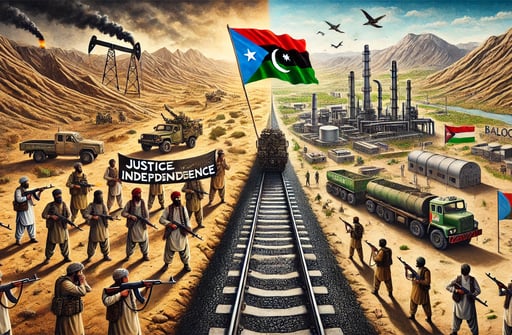
Motivations Behind the Hijacking
The latest hijacking of a train by the BLA is a reflection of deep-seated grievances based on felt political and economic exclusion. Balochistan, which is rich in natural resources like oil, gas, and minerals, is Pakistan's poorest province. The Baloch people have long complained that the federal government extracts these resources without paying fair returns to the local populations, and that this has generated widespread feelings of disenfranchisement.
In a recorded message issued during the hijacking, a BLA spokesman announced that the action was a direct reaction to the Pakistani military's repression and the exploitation of Balochistan resources. The spokesman underlined that years of systemic exploitation and human rights violations had pushed them to such extreme actions. They presented their cause as a struggle for justice and survival, seeking to safeguard their nation and its people from ongoing subjugation.
Implications and Regional Stability
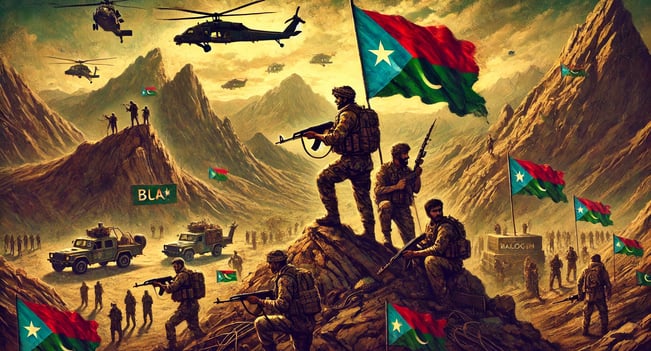
The hijacking event has far-reaching implications for Pakistan's internal security and regional stability. It underscores the growing insurgency in Balochistan and the difficulties the Pakistani government is experiencing in resolving the root causes of instability. The fact that the BLA was able to carry out such a high-profile attack is a cause for concern regarding the efficacy of existing counterinsurgency efforts and the possibility of further destabilization.
Additionally, the BLA's direct threats to foreign investors, especially Chinese ones, may discourage much-needed investment in the area. The group's threats against those projects that are seen to be exploiting local resources without any benefits to the indigenous people may increase security threats to existing and future projects. This may hinder economic development initiatives and further fuel the feeling of marginalization among the Baloch.
Path Forward


Solving the Balochistan insurgency involves a multi-pronged strategy that transcends military actions. The government of Pakistan must enter into serious negotiations with Baloch leaders and resolve the socio-economic inequalities that drive the insurgency. Ensuring that the people in the province benefit from the natural resources, upholding human rights, and providing more political autonomy may lead to enduring peace.
In addition, engaging the international community in brokering dialogue and development initiatives that center on the Baloch people's well-being could assist in restoring trust and lessening tensions. An all-around approach integrating security with socio-economic reforms is necessary to solve the underlying causes of the conflict and avoid similar future occurrences like the hijacking of the train.
Overall, the BLA's taking of the Jaffar Express is a powerful reminder of Balochistan's age-old woes. It also puts the pressure on the government of Pakistan to institute inclusive policies to redress the genuine demands of the people of Balochistan so that the province's precious resources translate into the enrichment of its own population.
The Concern for Balochistan: A Complex Issue
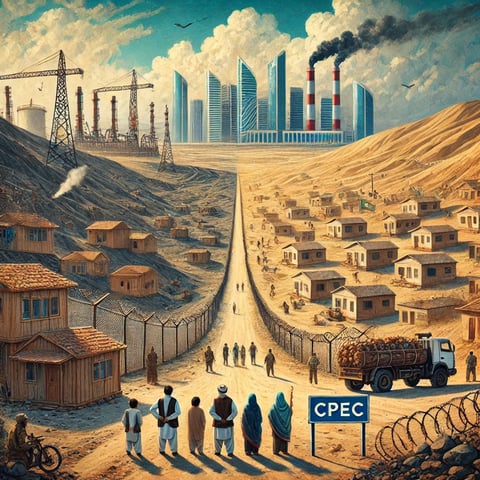
Balochistan, the most populous but underdeveloped province of Pakistan, has been a cause of concern with political turmoil, economic deprivation, and security issues for quite a while. In spite of being endowed with natural resources in terms of gas, coal, and minerals, Balochs remain poor, lack infrastructure, and have inadequate access to basic facilities such as healthcare and education.
Among Balochistan's top concerns are its separatist movements. Numerous Baloch nationalists have felt isolated by the central government, saying that the resources of the province are being drained without proper benefit to its populace. This resulted in insurgencies and security activities that further aggravated the instability in the region.
Furthermore, the China-Pakistan Economic Corridor (CPEC) running through Balochistan has generated controversy regarding whether local people really gain from mega projects like these. While the government asserts it brings economic prosperity, locals worry about displacement and a shortage of employment opportunities.
Human rights concerns such as enforced disappearances and curbs on freedom of expression have also attracted international scrutiny. To address Balochistan's grievances, there needs to be inclusive governance, equitable allocation of resources, and enhanced socio-economic development for stability and prosperity for its people.
What are your thoughts on the future of Balochistan? Let us know in the comments!
Our Commitment to Quality and Tusted Data
We meticulously gather and classify trusted data from various sources to deliver the best insights for our clients.


150+
20+
Trusted Data
Genuine Insights